Marrakesh has a museum showcasing Jewish artefacts and history, but nowhere is it mentioned that Jews left Morocco for their safety. Jack Mendel reports on his visit in Jewish News:
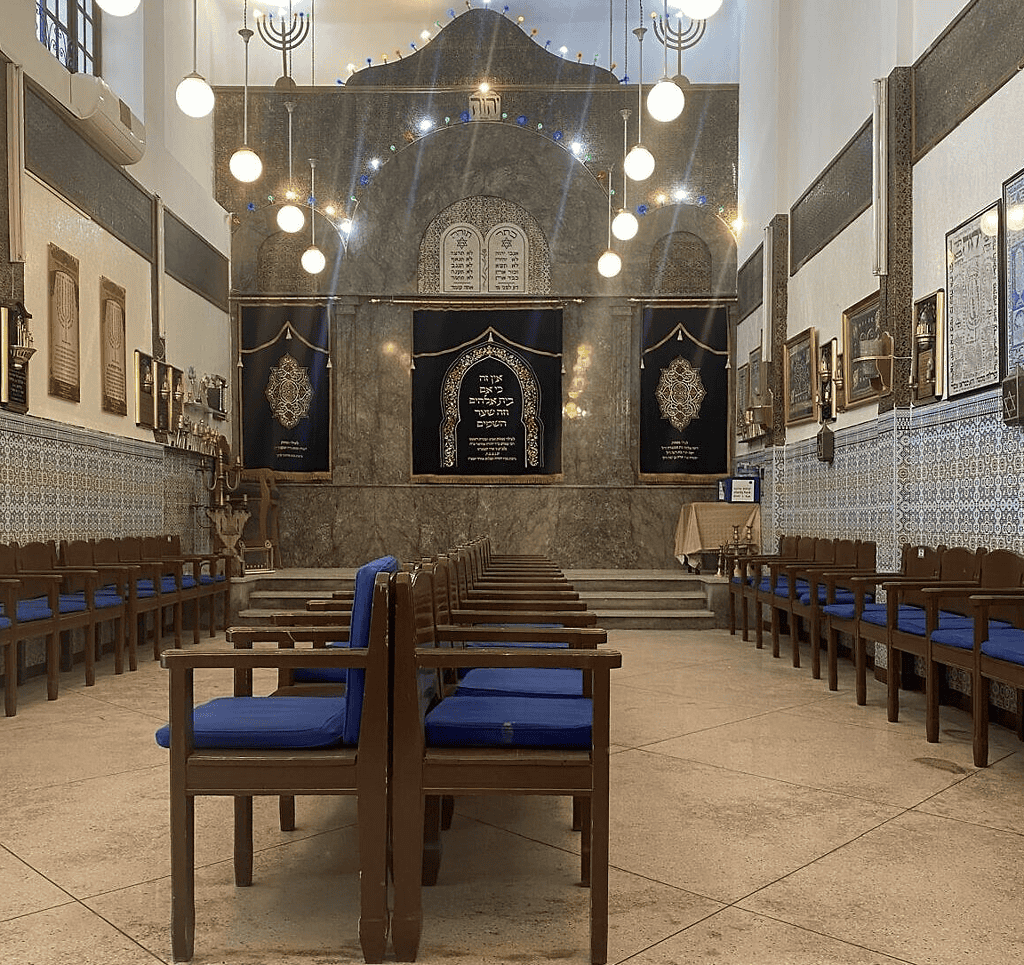
Lazaama synagogue, Marrakesh
Setting off into the 34 degree heat, past stalls with Palestinian flags near the main square; all of a sudden I saw a Star of David on the wall. But it was crossed out. Indeed, I saw a few like this. Now, I’m no detective but I suspect these were linked to the war in Gaza, yet it’s no less unsettling for an actual Jewish person to walk past.
I visited the House of Photography of Marrakech museum, where there was a whole section showcasing hundred-year-old photographs of Marrakechi Jews, and Berber Jews, from the nearby mountains. Unfortunately, the poster explaining it was mistranslated: ‘The Jew [singular] of Marrakech’.
While this was a typo, it left me wondering how many were actually left? The museum certainly didn’t explain where all the Jews went, and why, and how many remained. Intrigued at how this once-thriving community lived, I headed to the Mellah.
I stopped at a cafe ironically called Mazel. There’s no discernible acknowledgement of what that word means, or a nod to its Jewish links, or even where it is.
But those who know, know. In the Mellah, down narrow residential roads, the Laazama synagogue is marked out on the Talmoud Thora street. It’s 50 dirham (about four pounds) to get in, and the shul doubles up as a museum. As you go in, the bimah is by the entrance, with a large ornate ark at the front, built into the wall. All around the shul hall are wooden chairs with blue cushions, marriage certificates, Judaica, tzedakah boxes and photos from the past. It felt like a synagogue, alright. And it is still functioning.
As you step outside, there is a peaceful courtyard with a fountain and citrus trees. There’s a second floor closed to the public, with blue and white curtains, and a shop whose manager started blowing shofars, on sale for about £20. It felt pristine and delicate, but somewhat preserved.
The museum element has an exhibition about its Jewish past – the Bnei Menasche – and it even mentions Israel a few times. There are historic scrolls and jewellery, books and portraits, in addition to short films and other historical explanations. One remarkable thing was how much I recognised. The hundred-year-old books had the same prayers. The children in the pictures are messing around in shul just like I used to. But even so there is not a great deal of information about the present.
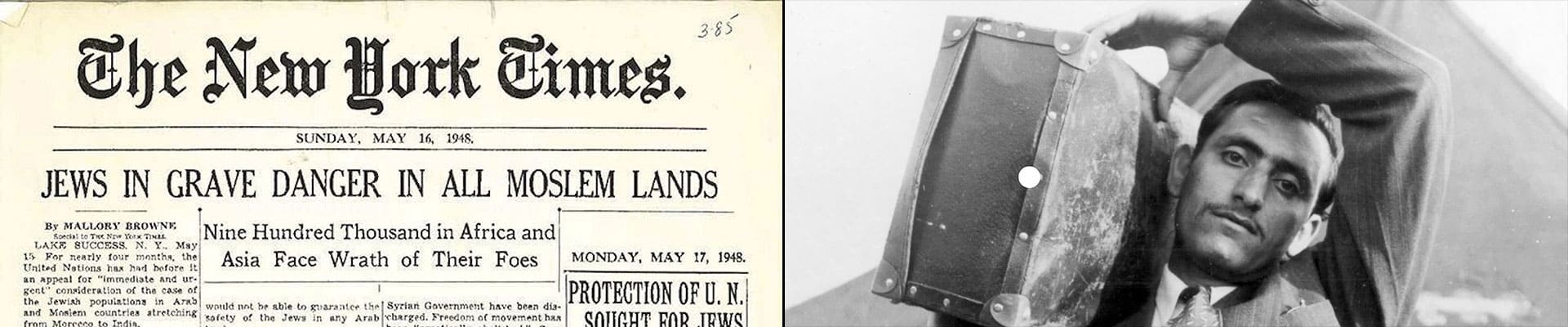
Nowhere does it mention that many Jews left fearing for their safety, or because they felt locals would become hostile due to the creation of Israel, or subsequent wars. There were riots across the Middle East and north Africa. Historic, once-thriving communities were uprooted. While many left, lots of this community are also buried down the road in the cemetery, and many of the graves are from the last 50-60 years.
This website is dedicated to preserving the memory of the near-extinct Jewish communities, of the Middle East and North Africa, documenting the stories of the Jewish refugees and their current struggle for recognition and restitution.
Point of No Return
Jewish Refugees from Arab and Muslim Countries
One-stop blog on the Middle East's forgotten Jewish refugees - updated daily.


Leave a Reply