For the first time, a French judge has recognised that the Iraqi regime stripped the Jews of their property and assets, despite denying that the French court had jurisdiction in the Beit Lawee case. In an interview with the French-Jewish radio station Radio J David Dahan of the Observatoire des juifs refugiés des pays arabes ( OJRPA – JJAC France) called on Iraq to recognise its responsibility in the case.


In its judgment of 2 February, a French court rejected the Iraqi-Jewish family’s claims against France for unpaid rent on its embassy, arguing that the case was outside its jurisdiction.
This is the first time that a French court has recognised the Nuremberg-style laws adopted by Arab countries. These laws have never been abrogated.
Dahan affirmed his determination to get the uprooting (akira) of the Jews of the Arab world recognised.
Here is a transcript of the Radio J interview with David Dahan:
Journalist (Radio J): This is historic. On Monday, the Paris Administrative Court recognized the existence of Iraqi racial laws that organized the dispossession of Iraqi Jews. The descendants of the owners of a private mansion in Baghdad believe they were plundered—a mansion that has housed the French Embassy in Iraq for decades. To talk about this, David Dahan is with us, president of the Observatory of Jewish Refugees from Arab Countries, committed to gaining recognition for this dispossession and the uprooting of Jews from Arab countries, known as AKIRA. Hello, David.
David Dahan: Hello, Ilana.
Journalist: Thank you very much for being with us. The court rejected your request for compensation but recognized the dispossession. Why is this important, and is it still a victory for you?
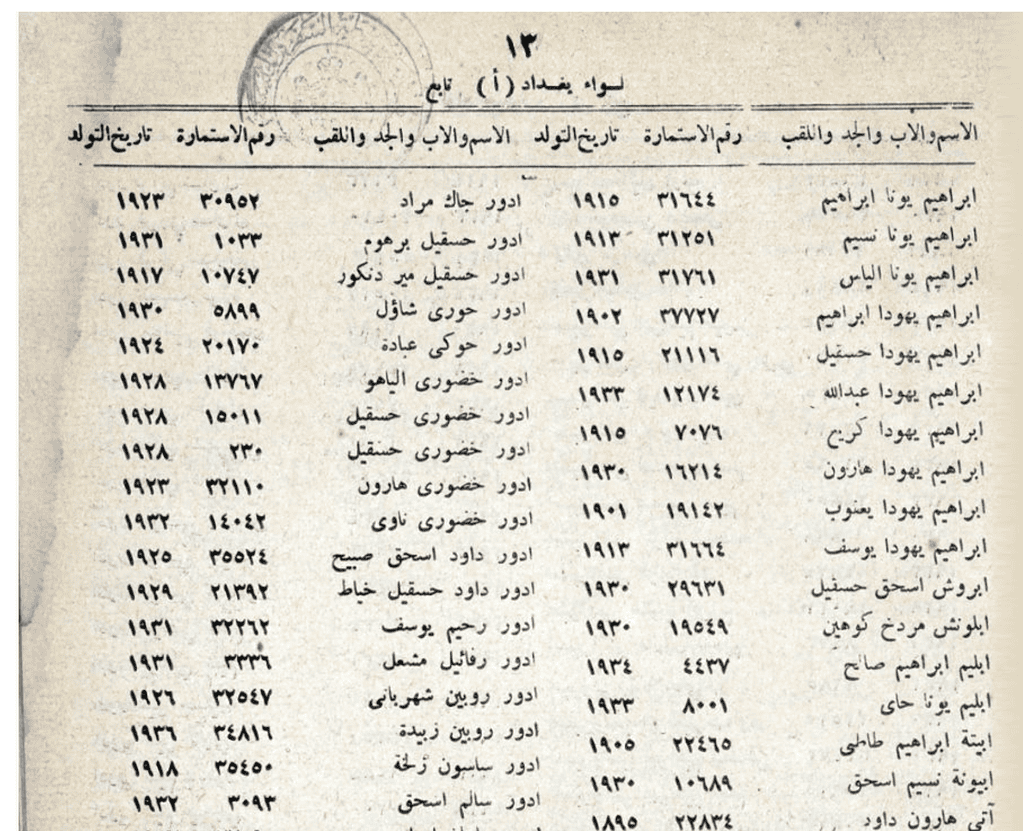
David Dahan: Well, it is a victory because, while the plaintiffs’ claim for damages was dismissed—since the administrative court declared itself incompetent to rule on Iraqi law, estimating the contract should be subject to Iraqi law—on the other hand (and I’ll take the liberty of reading the court’s reasoning), it recognizes the existence of racial laws still in force in Iraq. This is important to emphasize: “It is established that by Law No. 5 of March 10, 1951, the assets of Iraqi Jewish nationals stripped of their nationality were frozen, and that by an amendment to this law on September 25, 1967, Iraqi citizenship was withdrawn from nationals of the Jewish faith. It is also established that by a law of March 3, 1968, the Iraqi government—this was the era of Saddam Hussein—prohibited transactions related to the rental for more than one year of any property belonging to persons of the Jewish faith.” These are the types of laws the Iraqi state had adopted.
Journalist: So, the French Embassy has been “squatting” in this property, this private mansion, for over 50 years. How does the French State justify this?
David Dahan: Well, the French State doesn’t justify much because it doesn’t explain itself on this matter; at least, it doesn’t appear in the judgment or in their defense. However, we are raising the question of the problem: how can the French State continue to honor a contract now concluded with the Iraqi State—because the Iraqi State took over this property—knowing that it constitutes the handling of stolen property ? This is a crime against humanity; the French State will have to explain itself because France is subject to international law.
Journalist: Do you think this judgment, David, could create a precedent for other countries? Egypt, Syria, Algeria, Libya—where we know Jews were uprooted and stripped of their property?
David Dahan: Yes, if France indeed occupies other properties as was the case in Iraq. However, this statement of principle can certainly be used to launch legal actions against those states that adopted racial measures, notably in Syria, Egypt, and the countries you mentioned, absolutely!
Journalist: We are indeed talking about all these countries where Jews were uprooted. Do you expect to obtain reparations from them one day? That is your fight, I believe, David.
David Dahan: To be honest, we don’t really count on reparations because we know that Arab states are rather fanatical dictatorships and it is likely they will never pay a cent. On the other hand, obtaining a judgment of principle against them would be important for us, Sephardic and Mizrahi Jews, because we are entitled to justice as well, and these states must assume their responsibilities, whether this happens from a political or judicial standpoint, or through the spontaneous recognition of these states… we live in hope.
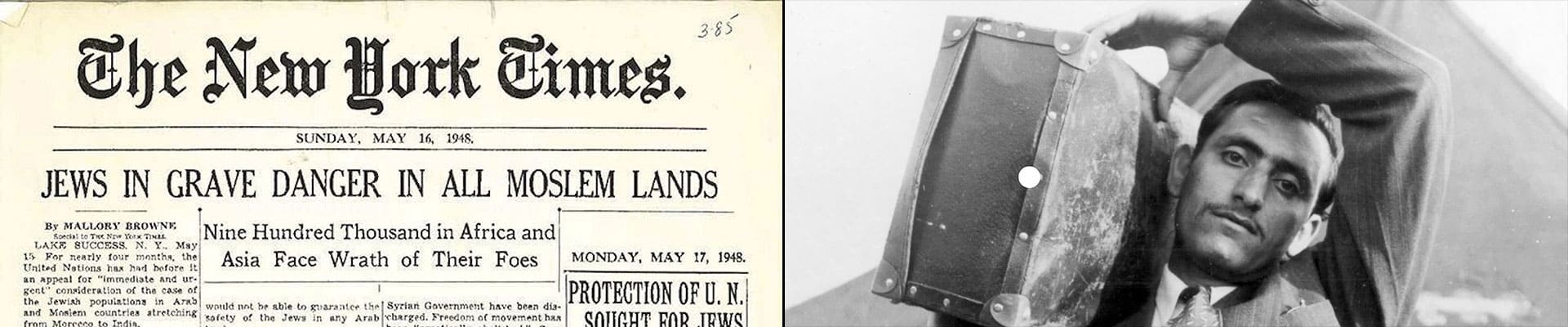
Journalist: Yes, we hope so. Nearly one million Jews were driven out of Arab countries between 1948 and 1970. Why does this history remain so unknown in your opinion, David?
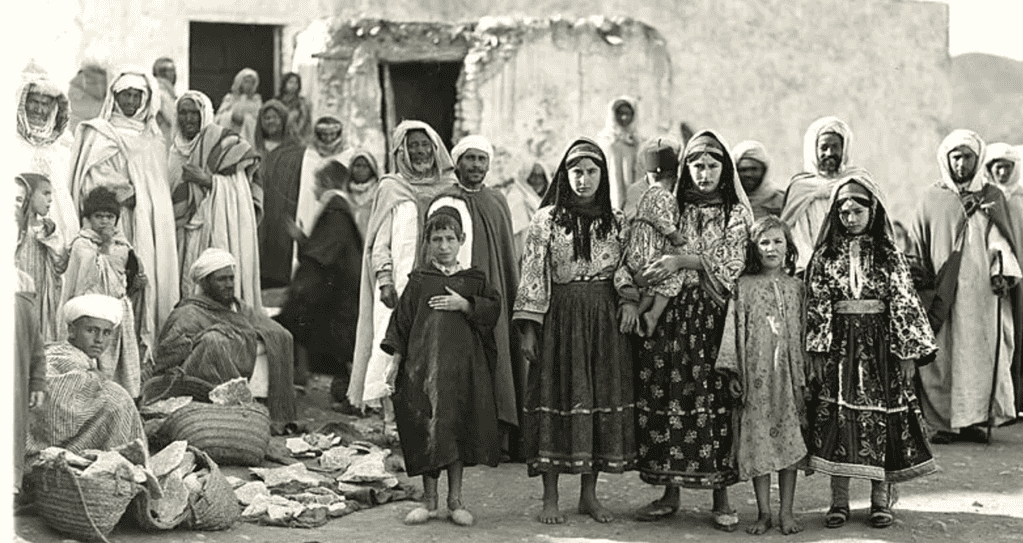
David Dahan: Quite simply because a fantasy was established by the Western world, which consists of saying that all Jews lived in a happy nostalgia in Arab countries, that everything always went very well, and that if they left overnight—almost all of them simultaneously, abandoning all their property—well, it was by magic or something like that. It’s partly because in the West, we don’t dare to recognize that the West committed misdeeds; except the West recognizes them—France recognizes what happened during World War II, as does Germany—whereas in Arab states, they don’t. We imagine—it’s a bit like the “noble savage” theory, you know: they can’t do harm, so these states are treated as if they were almost not responsible.
Journalist: Can we remind ourselves of the figure? Has it been calculated exactly how much was stolen from Jews in Arab countries?
David Dahan: Yes, absolutely. There were even two studies that confirmed this figure: it is 250 billion current dollars. ($263 billion – ed)
Journalist: Well, thank you very much, David Dahan. Perhaps a final word to conclude?
David Dahan: Yes, if there is one message to get across this morning, it is that Jews must participate in this fight; Jews must stand by their claims and not hesitate to join us.