

David Collier: ‘The BBC rewrites Moroccan-Jewish history’
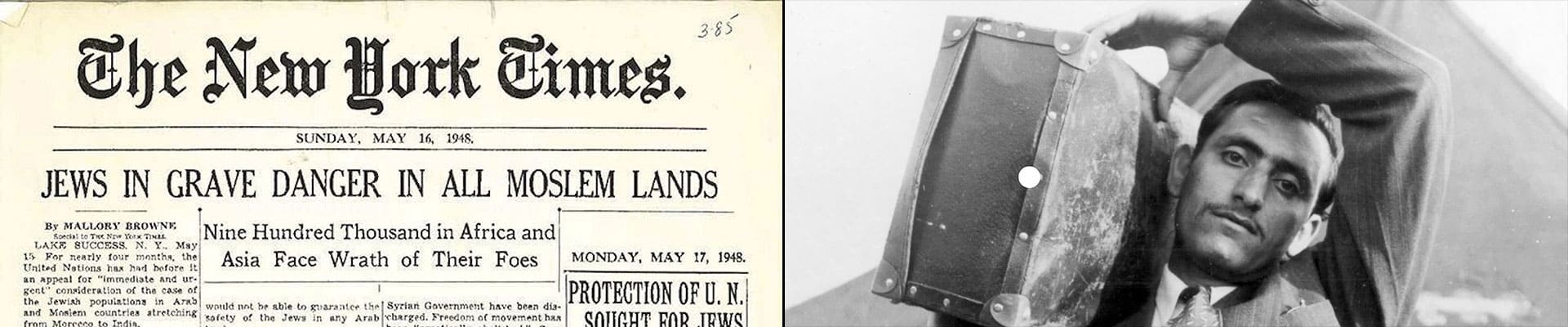
A recent BBC radio programme paints a picture of ‘coexistence’ between Jews and Muslims in Morocco. ( Read Point of No Return post here). But the reporter ignores the security guards outside each Jewish site. The narrative begins in 1948, erasing centuries of persecution. The departure of Moroccan Jews was not a sudden or inexplicable rupture of a harmonious society, blogger David Collier contends. The Jews left as soon as they had somewhere to go. It was the predictable outcome of centuries of legally enforced inferiority, periodic violence, and social degradation, extensively documented by contemporary observers:
The central pillar of the BBC’s podcast is the claim of historical coexistence. That claim collapses the moment one consults the historical record. We can begin 236 years ago, in 1790.
Following the death of Mohammed bin Abdallah, contemporary reports described the treatment of Morocco’s Jews in stark terms. A British newspaper, citing accounts from Gibraltar, recorded that Jews “in every part of the Empire” were “most inhumanly plundered,” with many leading Jewish merchants “assassinated in a very barbarous manner.”
This is not the language of coexistence. It is the documentary record of persecution.
In the early 1800s
In the early 1800s, An Account of the Empire of Morocco was published by James Grey Jackson, drawing on his years in Morocco as British consul. Jackson describes a society in which Jews were economically indispensable yet heavily taxed, socially degraded, and subject to legal restrictions and ritualised humiliation.
In one passage, describing popular custom and everyday language, Jackson records that Jews in Morocco were treated “somewhat worse than dogs in Christian countries:”
1834: The execution of Solika
Sol Hachuel (also known as Solika or Lalla Suleika) was a young Jewish woman from Tangier. Accused of converting to Islam and then renouncing it, she denied ever converting and refused repeated demands to accept Islam in exchange for her life. She was imprisoned, transported to Fez, and executed in 1834.
Just five years later, in 1839, The Baltimore Sun, citing a correspondent resident in Morocco retelling the story of Sol, described the Jews of the empire as “among the most degraded portions of the human family,” “politically slaves,” and living under particularly “abject” conditions:
1858: Jews as unclean animals
The Herald (Glasgow) citing a report from the French political journal Revue Contemporaine, published what it described as a “harrowing picture” of Jewish life in Morocco. The article states that Jews were regarded by Muslims as unclean animals, and enemies of god, and suggests that they were spared extermination only because they were economically useful. It describes them as bearing the condition and appearance of slaves:
1864: The relief campaign
By the 1860s, awareness of the plight of Moroccan Jewry had spread across the British Empire. In 1864, a relief campaign was launched by Sir Moses Montefiore following his visit there. A British newspaper stated that there could be “no doubt that the Jews of Morocco have been most barbarously treated by the masters of that land.” Montefiore received promises from the Sultan that Jews would be protected:
1868: The decree fails
Moses Montefiore’s 1863 visit to Morocco was prompted by a blood-libel case in the city of Safi. His subsequent campaign secured a formal decree from the Sultan affirming protection for Jews.
It appears that the decree did little to alter conditions on the ground. In 1868, The Times published correspondence from Tangier describing a religious fanatic in Tetuan who had assassinated several Jews and appeared to have devoted himself to their destruction:
1888: The value of a rat
A report on the state of the Jews originally published by the Morocco Correspondent in the Boston Evening Transcript leaves no doubt about the Jews being “despised” and “subjected to every imaginable degradation”. The report states that a local Muslim can “think no more of killing a Jew, if he can do it quietly, than of killing a rat”:
1894: Pogroms
This report from 1894 lays out a description of pogroms taking place at various sites that appear to be in the Atlas mountains around Marrakech.
Leave a Reply